






















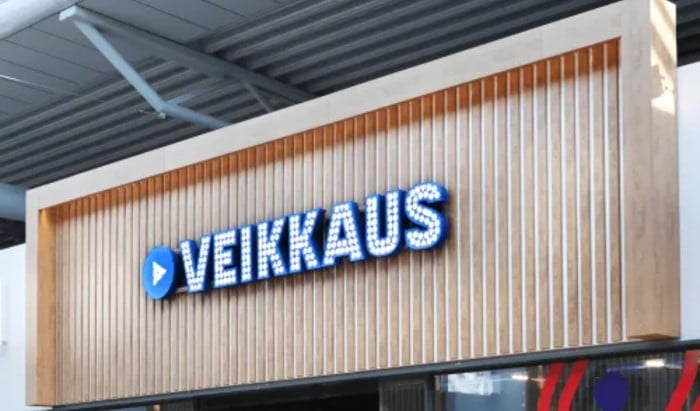
With change on the horizon in its home market of Finland, lottery company Veikkaus is weighing up its prospects both in the domestic market and further afield.
Though it is set to lose the monopoly over online betting and gaming, the state-owned firm has been highly supportive of this prospect for many years, viewing it as the best way Finland can reassert control over gambling within its borders.
The Finnish market is not Veikkaus’ only focus, however. Chief Executive Officer, Olli Sarekoski, tells Lottery Daily that the company has been monitoring the activities of other state-owned lottery companies in the wider betting and gaming space “very closely”.
“I welcome the development where companies with a lottery background have an active role in the development of money gaming,” he said.
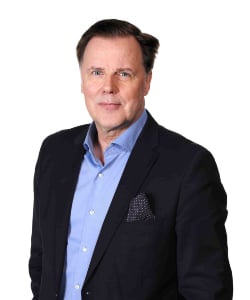
“In the gaming industry we are still lacking the common rules. It used to be that many of the private sector operators from iGaming started in unregulated markets, and are now stock listed.
“Lotteries, for a long time, were fighting against the opening of the market, and now most of these are regulated. The challenge in many cases is the unlicensed offering that makes competition unfair.”
Veikkaus prepares for Finnish launch
Unlicensed gaming is the main issue Veikkaus and the Finnish government have faced back home. The ideal channelisation rate – the number of customers directed to and using regulated gaming platforms – is far from the ideal target of 80%.
Sarekoski reveals that there are over 1,500 gaming companies targeting Finland, with more than half of total gaming volume in 2024 taking place outside the official, regulated market.
“The key point is the channeling rate,” he says. “A lot of gaming is outside the official channels. What is the point of the monopoly if this is the case?”
From July 2027, the Finnish market will open up. Over 50 companies are expected to join, subject to new licensing conditions and a tax rate of 22% on gross gaming revenue (GGR).
Veikkaus will retain the monopoly over lottery and land-based gaming activity, but will face new competitors in online betting and gaming – but the firm is more than confident that it will take on this new competition in its stride.
After all, it has been competing against the unregulated market for years. Sarekoski believes that the market re-regulation is going to even the playing field for his company.
“What is the role of the monopoly if it’s no longer channeling and functioning as a tool in preventing gaming harms?,” he continues.
“From our point of view, this unfair competition was making it a mission impossible. The system was not able to protect itself, that was very clear, and it’s better to have fair competition.”
The legislation to overhaul Finland’s gambling monopoly had broad support, with well over 90% of MPs voting in favour during the bill’s second reading in December 2025. This gives Veikkaus and others confidence that the market will be successful.
There are plenty of other case studies to learn from – Sweden overhauled its own monopoly in 2019, while the Netherlands re-regulated in 2021, but both have seen channelisation rates suffer in recent years.
For Veikkaus, the key is whether Finland can find the balance between being too liberal and too overrestrictive. At the moment, Sarekoski sees Finland’s new framework as “pretty liberal”, though he does note that political questions may be around the corner.
“It’s easier to create very tight regulations, but it’s very demanding to keep the channeling rate up,” he says. “When it comes to gaming harms, when gaming is taking place in the unofficial sites, it’s always much more complicated to take care of responsible gaming.
“That’s what we are putting a lot of pressure on. We should have competition, and fair competition. The competition should not be taking the highest risk with the gaming harms, it should be the customer experience.”
Can lotteries help lead the way?
As mentioned above, however, Finland is not Veikkaus’ only focus. The firm has become increasingly drawn to international activity in recent years, and has set a target of becoming “a respected and successful international money gaming group by 2030”.
Central to these ambitions is Fennica, its B2B gaming division. The company has built up a formidable presence internationally, active in 21 markets across North America, Latin America and Europe, with clients using both iLottery and iGaming products.
Jonas Reuter, Executive Vice President, Veikkaus International, explained: “We started off with our instant portfolio to the lottery market, and we have also started by taking our iCasino portfolio to different types of markets.
“We have an extremely good studio and an extremely good developer network, using local Finnish as well as international gaming studios that mainly come from the casual gaming industry.”
“This has created a special DNA in our type of games.”
Veikkaus sees its future as being international, while still envisioning a leading role in the development of its country’s new market from next summer onwards.
True to form due to its ambition to drive unlicensed operators out of Finland, it has also committed to working only with regulated markets and operators overseas as well.
The global lottery landscape has shifted greatly in recent years, with formerly-state owned companies like FDJ United, taking on a greater role in the development of the wider sector.
For its part, FDJ became much more involved in the wider industry via its takeover of Kindred in 2024. Another company with a lottery legacy, Allwyn, is now involved in gaming, betting, daily fantasy sports, and prediction markets.
Sarekoski notes that Allwyn and FDJ have played “quite a strong role in the transformation of money gaming”. With Veikkaus working closely with other leading lottery organisations, like the European Lotteries (EL), why should it not do the same?
“I think that’s a very positive thing. We also saw Flutter purchase Sisal, its vice versa,” Veikkaus CEO concludes.
“I’m welcoming it. It can be something that helps to create some kind of common standards or industry standard, in terms of industry’s own policies on how to operate and how not to operate.”
