























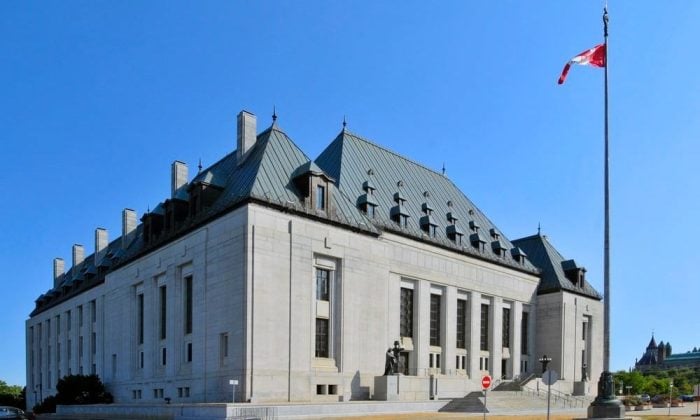
The Supreme Court of Canada is going to hear calls for an expansion of private gaming in the country, a prospect strongly opposed by some of the country’s state-owned provincial lottery companies.
A hearing will be held on 7 October 2026 where the Supreme Court will host the Attorney Generals of Alberta and Ontario, the only two of Canada’s 10 provinces which have a multi-licence betting and gaming market.
The attorney generals will argue that Ontario should be allowed to pool players of iGaming products and daily fantasy sports (DFS) with other jurisdictions. This would enable Ontario DFS and poker players to play against non-Ontario residents.
Joining the attorney generals are Flutter Entertainment, a major gaming multinational and one of the biggest poker operators in Ontario; the Canadian Gaming Association (CGA), the trade body for Canadian gambling companies; and NSUS Group, an iGaming-focused marketing firm.
The hearing will not concern opening up Alberta’s peer-to-peer gaming ecosystems to cross-border commerce, though it will enable Alberta residents to play against Ontario residents in fantasy sports and poker tournaments.
However, Alberta wanted to join the appeal process as the outcome would be of “significant interest” to its newly-launched iGaming market, in the words of provincial Attorney General Mickey Amery.
The province’s market launch on 13 July this year came four years and three months after Ontario became the first province to set up multi-licence betting and gaming in Canada, in April 2022.
In all other provinces, betting and gambling can legally only be provided by the relevant Crown Corporation – Loto-Québec, the British Columbia Lottery Corporation (BCLC), and the Atlantic Lottery Corporation (ALC) in New Brunswick, Prince Edward Island, Nova Scotia and Newfoundland and Labrador.
Ontario’s desire to take its P2P gaming activities beyond state-borders was approved by the Ontario Court of Appeal in 2024. This was subsequently opposed by Loto-Québec, the BCLC, ALC, and Manitoba Liquor and Lotteries (MBLL), which argued that the Ontario decision violated Canada’s Criminal Code.
The crux of the Ontarian argument is that as long as one side of the fantasy sports or poker game is hosted and regulated in the province, opening the game up to a wider pool across other jurisdictions should be fair game.
Crown Corporations in other provinces are less than enthused, as expected, with some already viewing gaming activity in Canada – and perhaps even in still-young Alberta – as encroaching on their own legal monopolies.
Loto-Québec has already found itself embroiled in a war of words with a group of companies calling for the market in its own province to be opened up to more licence holders.