

















The Department of Culture, Media and Sport (DCMS) revealed this week that it will increase gambling licence fees after concluding a long-running consultation with various stakeholders.
DCMS had been considering three options – increasing fees by 30%, increasing by 20%, or increasing by 20% with a 10% add on to combat illegal gambling. After considering various responses, it opted for 25% as a new option.
However, society lotteries like the Health Lottery and the UK Postcode Lottery will not have to pay this. Instead society lottery licence fees will be frozen in a major win for the sector.
Society lottery feedback on the proposed 25% increase was overwhelmingly negative, according to DCMS. Society lotteries’ main gripe was that the proposals “did not reflect the low risk profile and purpose of small, charity focused society lottery”.
DCMS explained: “Some respondents pointed to the fact that society lotteries operate within a structure where both the society and the external lottery manager are licensed by the Gambling Commission, and therefore both would be subject to increases.
“In recognition of this, these respondents would like to see the methodology for calculating fees adjusted to take this into account.”
Under the current system, small-scale charity and society lotteries with turnover of less than £250,000 per year or £20,000 in a single draw do not require a Gambling Commission licence, and instead must be registered with the local authority they are active in.
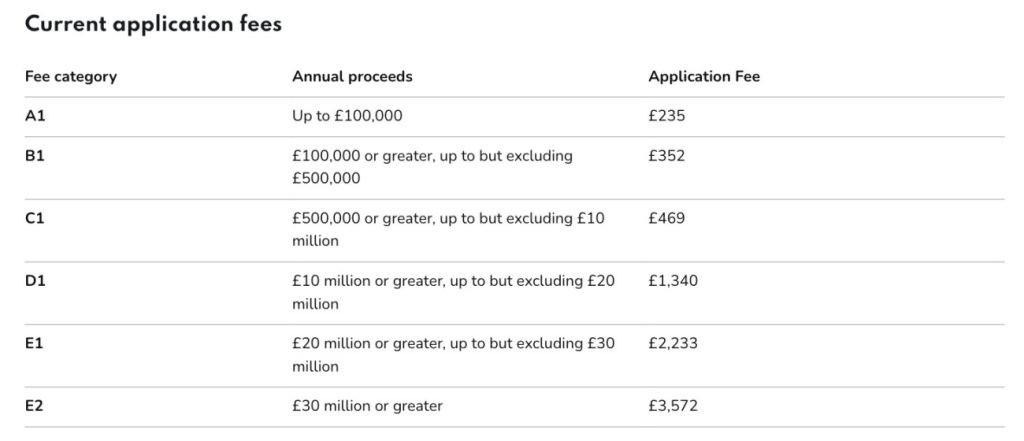
Larger society lotteries do require a licence, with the fees outlined below. These fees will remain frozen at this level following DCMS consultation:
DCMS still concerned with illegal lotteries
The government’s proposal that gambling licence fees be used to pay for anti-illegal gambling operations was not taken on board by any operator respondents, despite the regulated industry and government’s shared interest in driving back the sector.
In the case of society lotteries, some companies told DCMS that “there is little regulatory effort attributable to the society lotteries sector, and no evidence of illegal markets”.
However, the government has taken note of the Gambling Commission’s reports of over 438 suspected illegal lotteries in 2025 and 544 reports of society lotteries presenting themselves as free draws and prize competitions.
Though they may not be entirely on the same page, the government added that it is “aware that any cost increases would likely reduce the amounts available for good causes, and this has been a consideration in the decision to freeze fees for society lotteries”.
“Some respondents made the point that society lotteries operate within a structure where both the society and the external lottery manager need to be licensed by the Gambling Commission, and both would be subject to fee increases,” DCMS continued.
“However, this ‘double impact’ will not materialise under our revised approach as society lotteries will be exempt from fees increases.”
Ultimately, the government decided that the burden on the society lottery sector and the potential impact on returns to good causes was enough of a reason to exclude the companies from the 25% licence fee increase.
However, external lottery managers will still be subject to the fee, as the government concluded that they “typically operate as commercial entities”.
“This will ensure that an appropriate amount is recovered from the lotteries sector in order for the Gambling Commission to meet its costs,” DCMS statement concluded.