





















A British peer has called on the government to ‘even up’ the way the gambling and lotteries sectors are regulated.
Perceived regulatory disparities between lotteries and betting have been raised multiple times before, such as during the three-year duration of the 2005 Gambling Act review.
Gambling stakeholders, and policymakers who share their viewpoints, have often argued that lotteries benefit from more favourable regulation despite also having the potential to cause harmful spending among consumers.
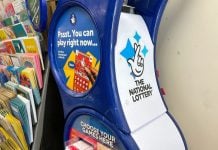
In a House of Lords committee hearing this week, Conservative peer Lord Smith of Hindhead made comparisons between the ways lottery play and sports betting are perceived.
“We have got in a bit of a muddle, where you spend £1,000 on the National Lottery you’re a hero, but you spend £1,000 on an online betting account, you’ve got a bit of a problem,” he said.
“When are we going to try and even that up? When are we going to try and even up the advertising? What are we going to do about that?”
Smith’s main gripe is the way lottery play is marketed and advertised.
In his view, those who play lottery games like the standard lotto, the Euromillions, Thunderball and Set for Life etc, are presented as “a hero because they’ve supported the Olympic team, they’ve rebuilt historic buildings in every diocese in the UK”.
He contrasted this with what he believes is a much more negative viewpoint of people holding online betting accounts.
“They’ve done X, Y, Z, the list goes on,” he said. “They’re a hero … if a person were to have an online betting account and they’re spending £1,000 a year on that, they would be regarded by many people as being almost a social degenerate, and probably unable to get a mortgage.
“Can you see the muddle we’ve got into?”
Smith’s comments cut into a topic which is often discussed in conversations around lottery and gambling regulation – that being the addictiveness of the lotteries as a product in comparison to sports betting and casino gaming.
The increased availability of instant win games as scratchcard-esque products migrated online has raised concerns about how lottery play can lead to gambling addiction, although lotteries are generally regarded as much lower risk than their gambling counterparts.
In Ireland, for example, concerns were raised in an academic study late last year which accused the Irish National Lottery of downplaying its products’ potential for gambling-related harm and addiction.
Back in Britain, Baroness Twycross, the government’s Gambling Minister, remarked that the picture painted by Lord Smith was not one “that I entirely recognise”.
Sarah Fox, Deputy Director, Gambling and Lotteries at Department for Digital, Culture, Media and Sport (DCMS), remarked that the debate hinges on the discussion about “different products having different levels of harm”.
“We know from most of the surveys that are out there that doing a lotto draw is the least harmful way of gambling, your dopamine levels that you get from that instant win online is just not there with the lottery,” Fox said.
Nonetheless, Smith was not backing down, and his viewpoint is one that will likely continue to be raised in discussions around lottery regulations in the UK and elsewhere.
“I would argue that scratchcards and instant wins online … is a gateway to gambling, and of all the games which are played by people with a gambling addiction, the National Lottery is the most widely played game amongst all the gambling they do,” he said.
