





















In Brazil, the legislative conflict between the federal government and state municipalities on gambling licences and concessions has reached a fevered crisis point.
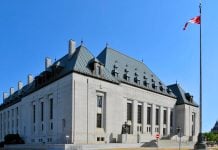
Yesterday, the Federal Supreme Court (STF) sanctioned an immediate suspension of all state and municipal lotteries, ordering them to halt all gaming operations, services and tenders.
Municipal lotteries were warned that non-compliance with the STF’s demands would lead to daily fines of R$500,000 (€90,000), via an injunction authorised by Justice Nunes Marques.
The Justice triggered the injunction to ensure that the federal dispute outlined in ADPF No. 1,212 is resolved strictly in accordance with existing laws and constitutional determinations.
An unsettled conflict lies at the heart of the deliberation and design of Brazil’s fixed-odds gambling market prior to the 2025 launch of the Bets regime. Municipal authorities continue to mount a legislative challenge seeking constitutional authority for municipal governments to license their own lotteries and sports-betting platforms.
In response, federal authorities maintain that lotteries and betting cannot be interpreted as a municipal service in the interest of local communities and therefore fall “exclusively and unquestionably under federal jurisdiction”.
Disputes were instantly brought to light in 2025, as the state firms of Loterj (Rio de Janeiro), Lottopar (Paraná) and LEMG (Minas Gerais) launched independent sportsbook licences, operating separate from the rules, integrity mechanisms and fiscal remit of the federal Bets regime.
The state firms argue they had obtained authorisation under updated municipal legislation to provide sports betting and other online services, provided that operations were restricted to customers physically located within state borders.
However, as reported by SBC Notícias, Justice Nunes Marques rejected that reasoning outright, stating that municipalities had “usurped the Union’s regulatory competence” and created “an irregular parallel system of consortia, tenders and fixed-odds betting acts” that threatened the coherence of Brazil’s new gambling framework. He further warned that the rapid expansion of locally authorised lotteries risked generating “severe legal uncertainty for the federal pact”.
Under the injunction, mayors, secretaries and business executives face personal fines of R$50,000 (€9000) per day if they ignore the ruling. Federal agencies including SPA, Anatel and ANJL have been ordered to reinforce blocking, monitoring and detection of irregular platforms.
At a federal level, a resolution is vital as, in 2026, Congress and the Senate will review the modalities of PL 2.234/2022. Branded as the “Casino Bill”, the proposal seeks to repeal the prohibition of land-based casinos in Brazil imposed by Decree-Law No. 9,215 of 1946 under President Gaspar Dutra.
Though sidelined for more than a decade, the Casino Bill has been recommissioned by Senator Irajá Abreu (PSD-TO), who aims to liberalise land-based gambling for the benefit of Brazil’s tourism and leisure sectors.
The bill proposes to legalise land-based casinos, bingo halls, jogo do bicho, horse-race betting and other games of chance under a new federal regulatory framework. However, critics argue that several modalities reflect an outdated structure due to the bill’s long period off the legislative agenda, requiring deep modifications before it can progress.
Whether Brasília has the political will to modernise its land-based gambling laws remains unclear.
2025 concludes with the Senate settling on a new tax plan for the Bets Regime, which will raise GGR taxes from 12% to 18% over a three-year period to 2028.
The tax settlement of 18% GGR closes out a rollercoaster first year of the Bets regulatory regime, which has seen Brazil launch its fixed-odds and online gambling marketplace while operators adapt to new restrictions on bonuses, incentives and the targeting of low-income (Bolsa Família) users.
Further regulatory change is expected in 2026, as Brazil moves to implement its central self-exclusion scheme and finalise a specific bill governing gambling advertising — in which a blanket ban on all gambling advertising will be considered by deputies.
